Digital audio recorder device · Complete guide
Digital audio recorder devices: how to choose the right one
Two hardware options cover every recording scenario. Here is how to pick the one that fits your workflow.
Based on real user reviews · Trusted by 2M+ users globally since 2023
The basics
What is a digital audio recorder device?
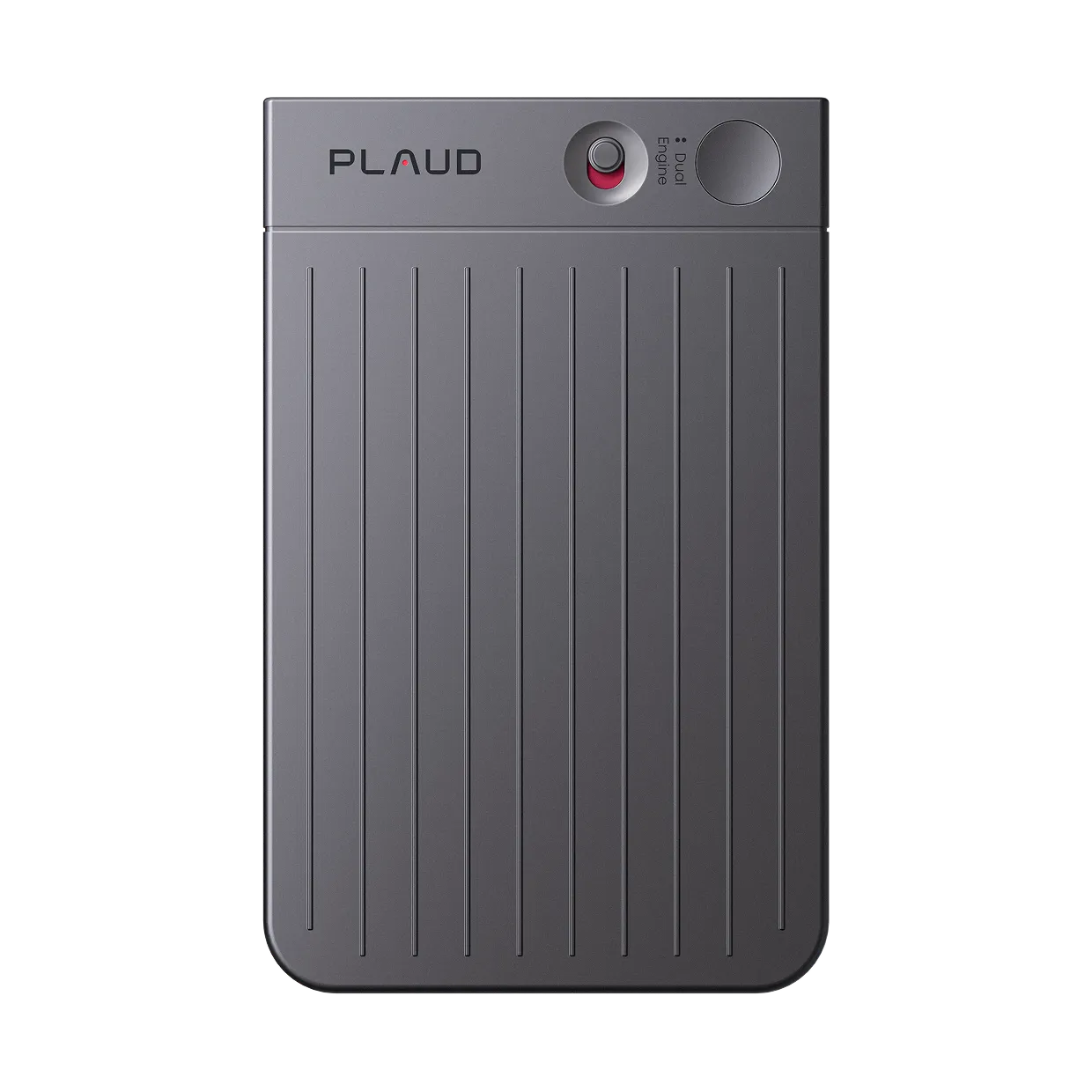
A digital audio recorder device is a dedicated tool used to capture speech for dictation, meetings, lectures, interviews, and field recording. It stores recordings as digital files and can turn speech into searchable text after syncing with transcription software. Plaud hardware records independently from your phone and uses Plaud Intelligence to generate transcripts, summaries, speaker IDs, and action items.
Works beyond the meeting room
A dedicated device records interviews, lectures, field visits, and voice memos anywhere. It does not need a video call platform to function.
Text, not just an audio file
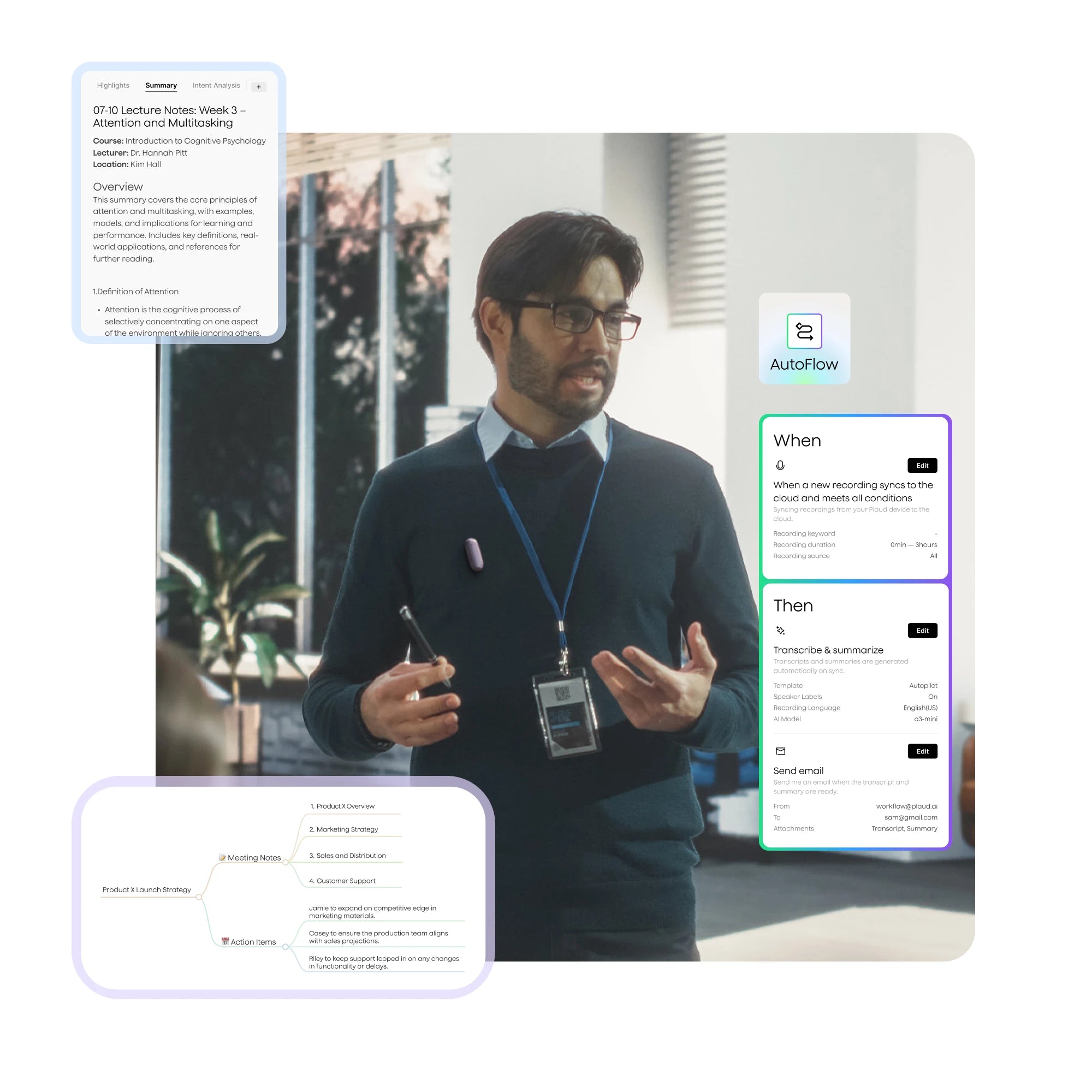
Plaud Intelligence converts speech to transcripts in 112 languages and generates summaries, speaker IDs, and action items.
Records while your phone stays free
The recorder runs independently from your phone. You can make calls, take photos, or work in another app while the device captures audio.
| Capability | Software app | Plaud hardware |
|---|---|---|
| Works without a meeting platform | ✗ | ✓ |
| Records in-person without an invite link | ✗ | ✓ |
| Output can become searchable text | ✓ | ✓ |
| Records audio offline | Depends on app | ✓ |
| Dedicated microphone close to the speaker | ✗ | ✓ |
| Transcription without a separate manual upload workflow | Depends on app | ✓ |
By use case
Find the digital audio recorder device for your workflow
Same hardware, three scenario-specific setups. Pick the one closest to your day-to-day.

Qualitative interviews
Clips to a lapel for clear audio during 1:1 research conversations. No phone microphone needed.
Lectures and classes
Place it on a desk and capture the full lecture. Transcripts sync to the Plaud App after class.

Business meetings
Sits flat on any table and picks up multi-speaker discussions from up to 3 meters away.
Form factors
Types of digital audio recorder devices
Digital audio recorder devices come in two main hardware form factors. The right one depends on how and where you record.
When you sit across the table
Attaches to your phone for call recording and sits on a desk for in-person conversations. Dual-mode recording, 0.12-inch thin, up to 30 hours battery, 64GB local storage.
When conversations come to you on the move
Clips to a lapel, wrist, or bag strap and records hands-free. Works for phone calls, 1:1 interviews, and any situation where placing a device on a table is not practical.
Both form factors run the same Plaud Intelligence: transcription in 112 languages, summary, speaker ID, and 10,000+ templates are identical across all devices.
Browse all scenarios
How to choose a digital audio recorder device
Match the closest recording scenario. Each one has its own setup guide.
 Interviews
Digital audio recorder device for interviews
Researchers want accurate quotes from 1:1 conversations without relying on a phone microphone.
 Lectures
Digital audio recorder device for lectures
Students need a reliable way to capture lectures and turn them into study notes without manual typing.
 Meetings
Digital audio recorder device for meetings
Teams record discussions to get structured summaries and action items without a bot in the room.
Digital audio recorder devices
Two digital audio recorder devices
Both capture audio in different environments. Pick by how you carry the device.
 Card-slim
Plaud Note
2.99 mm · 2 MEMS mics · 30 hr battery · 64 GB
- 2.99 mm thin, credit-card profile, 30 g, fits any pocket
- 30 hr continuous recording on a single charge
- 2 MEMS microphones, up to 3-meter pickup range
- Available in: Plaud Note
 Wearable
Plaud NotePin S
17.4 g · clip-on · 20 hr battery · 64 GB
- 17.4 g, worn with lanyard, wristband, clip, or magnetic pin
- 20 hr continuous recording on a single charge
- Microphone stays close to your mouth at all times
- Available in: Plaud NotePin S
Customer stories
Real Plaud users, across very different jobs
From qualitative research to lecture halls, three people who turned a recorder into the most-used tool in their day.
 Journalism
“We lost exact quotes. And for interviews and content, that's a big deal.”
 Education
“The summarization feature is definitely the standout!”
 Field Work
“For longer one- to two-hour meetings, this little device is amazing. I can concentrate on what's being said knowing that I only have to connect to my phone, and that's when the magic happens.”
Real Plaud customers. Full library at plaud.ai/blogs/user-story.
Trusted by over 2 million professionals globally
The Verge
"The Plaud Note Pro automatically switches between recording calls and in-person meetings, eliminating the need for the physical toggle on the original Plaud Note released in 20..."
Forbes
"The new Plaud Note Pro can capture audio using studio-grade recording hardware and intelligent noise isolation driven by AI. The device is 2.9mm thick and the same size as an A..."
TechCrunch
"The company said that the Note Pro has four MEMS (Micro-Electro-Mechanical Systems) mics, compared with two on the last-gen device, to better capture audio. Because of this, th..."
WIRED
"This wearable AI notetaker will transcribe your meetings - and someday, your entire life. Plaud's AI-powered NotePin records and transcribes all the conversations around you. The..."
Frequently asked questions
Which is the best digital note-taking device?
The best device depends on your recording scenario. Plaud Note suits desk-based recording for meetings, lectures, and voice memos. Plaud NotePin S suits hands-free recording for interviews and fieldwork. Both run the same Plaud Intelligence to deliver transcripts in 112 languages.
Which digital voice recorder is best?
For AI transcription and summaries, Plaud Note ($159) is the top-rated option. It records up to 30 hours on one charge, picks up audio from up to 3 meters away, and converts speech to searchable text through Plaud Intelligence.
Which device is best for recording audio?
Traditional standalone recorders capture high-quality audio but deliver only audio files. Plaud hardware combines dedicated microphones with Plaud Intelligence to produce transcripts, summaries, and speaker-labeled notes from the same recording session.
Can I use an existing voice recorder as a transcription input device?
Many users find that standard recorders produce audio files they then have to transcribe manually or upload to a separate service. Plaud Note handles both steps: press record, then sync to the Plaud App for instant transcripts.
Does a digital audio recorder device work offline?
Recording works fully offline on both Plaud Note and Plaud NotePin S. Transcription and summary require a Wi-Fi or Bluetooth connection to sync with the Plaud App, but audio is always saved to the 64 GB internal storage.
Is it legal to record conversations?
Recording laws vary by country, state, and context. Some require one-party consent. Others require all parties to agree. Always confirm the rules that apply to your location and the people involved before recording any conversation.
Get started
See which Plaud device fits your digital audio recorder device workflow
Two form factors. Same Plaud Intelligence. Pick the digital audio recorder device that fits how you work.